Why are the Met still recording non-crime hate incidents?
The police are as contemptuous of free speech as ever.
Want unlimited, ad-free access? Become a spiked supporter.
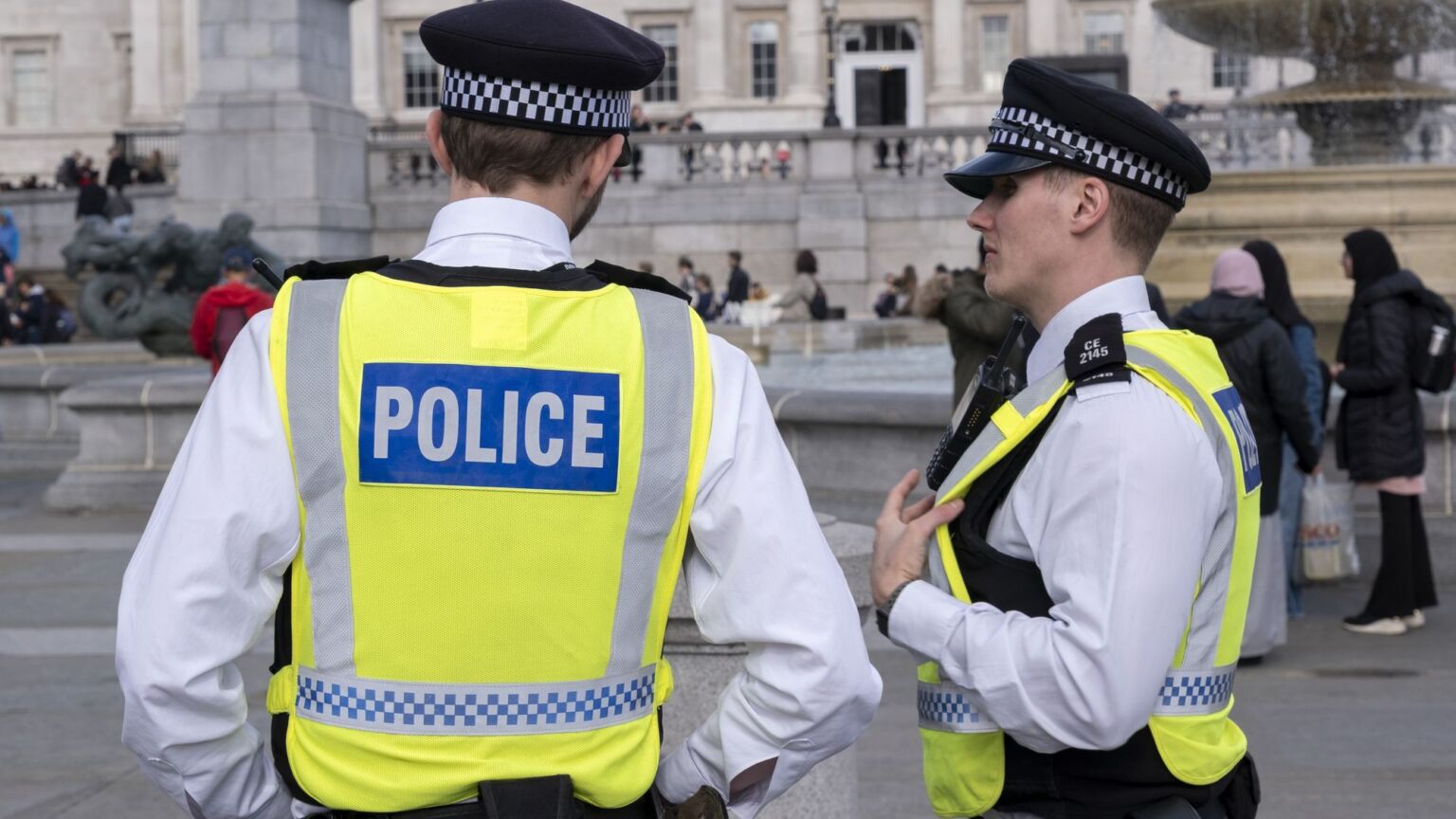
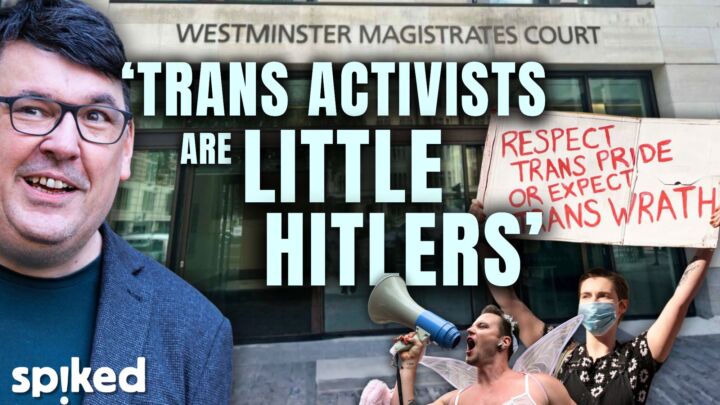
Many of us breathed a sigh of relief when, back in October, the Metropolitan Police declared that they would stop investigating non-crime hate incidents (NCHIs). Sparked by Graham Linehan’s now notorious arrest for some jokey tweets the month prior, the move by Britain’s biggest police force looked as if it might put significant pressure on other police forces to follow suit. It seemed to be a rare victory for free speech.
But this optimism has turned out to be entirely premature. While the Met no longer ‘investigates’ NCHIs, it continues to secretly record them. According to Guido Fawkes, in the week that followed 20 October, the day Met commissioner Mark Rowley promised that NCHIs would be scrapped, 57 were recorded against unsuspecting members of the public. In other words, almost nothing has changed.
Yes, it is true that police will no longer actively ‘investigate’ NCHIs. This is a small step in the right direction, as such actions have represented a clear misuse of police resources. The mere prospect of a police officer at the door, questioning someone about a social-media comment or even a casual conversation, has had a chilling effect on free expression.
But if NCHIs are no longer to be investigated, what is the point of recording them at all? Well, the Met insist that they continue to provide ‘valuable pieces of intelligence to establish potential patterns of behaviour or criminality’. In other words, they will continue to record them because, supposedly, somebody who says something disagreeable might go on to commit a crime. It is the grim incarnation of science-fiction writer Philip K Dick’s ‘precrime’, and a disturbing reminder that, in the UK in the 21st century, someone can be burdened with a police record for expressing lawful opinions. Somehow, this has become a routine aspect of policing.
While NCHIs do not amount to a criminal offence, they can still have a tangible impact on a person’s life. For example, an NCHI being recorded against an individual could be revealed during an enhanced security check, meaning that person could be denied a career. Even an NCHI resulting from a misunderstanding could appear during such checks. The Met’s decision to go on recording these ‘non-crimes’ is not without significance.
Those whose details are entered on to Met intelligence indices due to NCHIs will, almost certainly, be unaware of the fact. They might only ever find out after they fail to land a job that requires a greater degree of vetting. Many will probably never realise that their information is sitting on a police database alongside suspected street robbers, sex offenders and drug dealers.
The arrest of comedy writer Linehan at Heathrow Airport, on ‘suspicion of inciting violence’ in posts on X, was undoubtedly an embarrassing moment for the Met. I doubt they would have anticipated the fierce, international backlash. At the time, Rowley made the excuse that his officers had no choice but to arrest Linehan. That is very difficult to believe. Despite increasingly being hemmed in by bureaucracy and ‘key performance indicators’, officers can still use their discretion. It would have been inconceivable they were unaware of Linehan’s public profile, and so his arrest must have been signed off at a very high level. It would have been a conscious decision of a senior officer to have Linehan arrested.

The public outrage that followed Linehan’s arrest led Rowley to urge the UK government to ‘change or clarify’ the law on hate speech. He said he recognised ‘concern caused by such incidents given differing perspectives on the balance between free speech and the risks of inciting violence in the real world’. So why, then, is his force continuing to ride roughshod over free speech?
The emergence, in recent years, of ‘hate crime’ units across UK policing means that the pressure to record NCHIs will not be diminishing any time soon. Such units are often staffed by officers who understand that promoting a ‘progressive’ view of the world can only assist with their careers.
Outside the Met, NCHIs have very few supporters left. Even the original architect of them, the notoriously woke College of Policing, released a report in October 2025 outlining possible reforms, describing the current police approach as ‘not fit for purpose’.
But the policing of ‘non-crimes’ cannot be ‘reformed’. The practice must instead be abolished – anything else is only tinkering. It’s time we put an end to this insidious threat to free speech.
Paul Birch is a retired police officer.
You’ve read 3 free articles this month.
Support spiked and get unlimited access.
Support spiked – £1 a month for 3 months
spiked is funded by readers like you. Only 0.1% of regular readers currently support us. If just 1% did, we could grow our team and step up the fight for free speech and democracy.
Become a spiked supporter and enjoy unlimited, ad-free access, bonus content and exclusive events – while helping to keep independent journalism alive.
———————————————————————————————————————————–
Exclusive January offer: join today for £1 a month for 3 months. Then £5 a month, cancel anytime.
———————————————————————————————————————————–
Monthly support makes the biggest difference. Thank you.


Comments
Want to join the conversation?
Only spiked supporters and patrons, who donate regularly to us, can comment on our articles.