Decriminalising rough sleeping will do little to help the homeless
Labour’s repeal of the Vagrancy Act is a piece of pointless posturing.
Want unlimited, ad-free access? Become a spiked supporter.
A 200-year-old relic of the Georgian era has finally been buried. Labour’s recent decision to repeal the 1824 Vagrancy Act means that rough sleeping and begging have officially been decriminalised across England and Wales.
Predictably, the commentary pages have been filled with back-slapping. Campaigners are calling it a ‘watershed moment’ for human rights, while ministers assure us we are shifting ‘from punishment to prevention’.
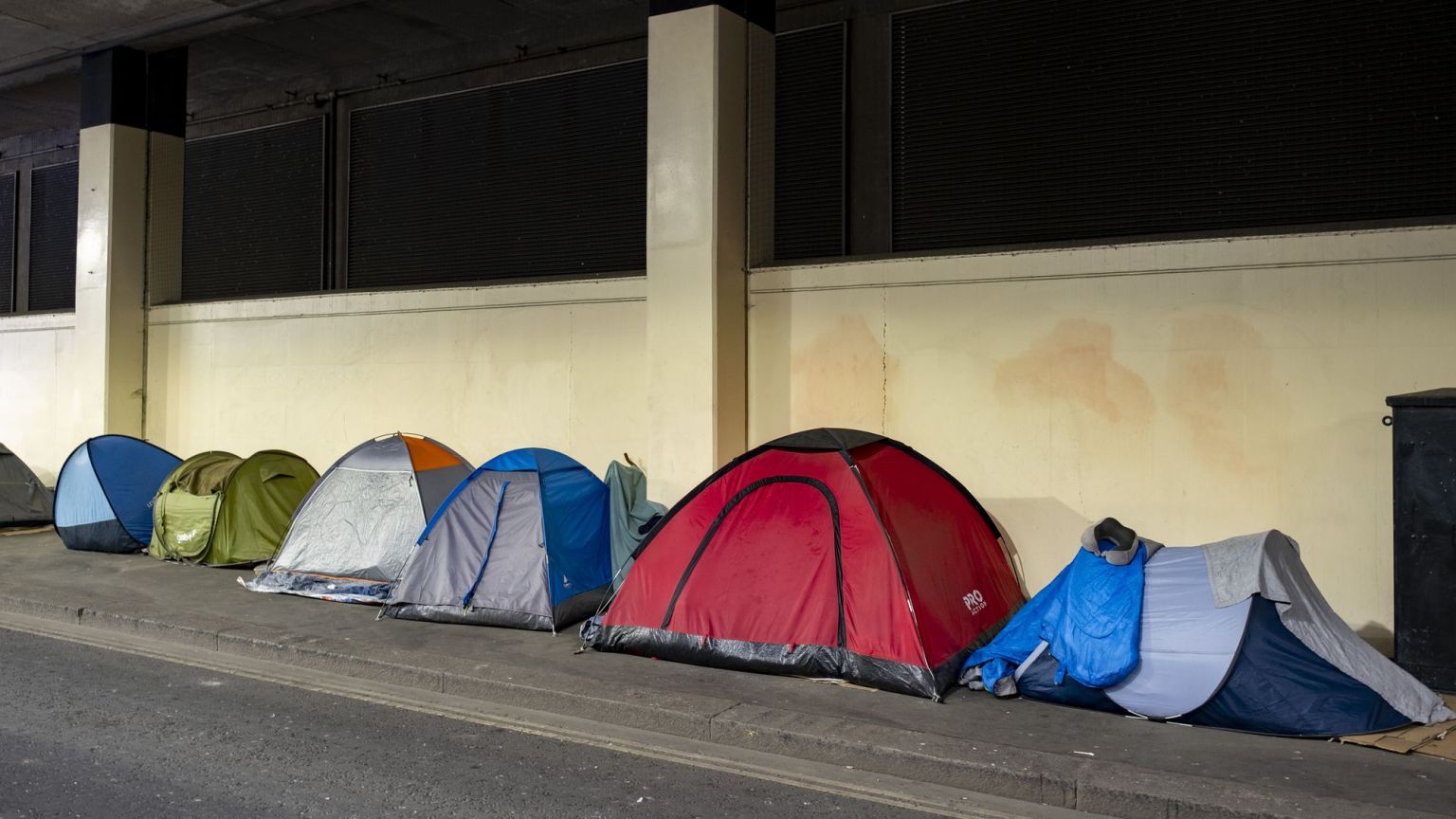
But let’s be honest, decriminalising vagrancy doesn’t address the actual problem of homelessness. No one walks down a high street in modern Britain and feels comfortable with what they see. Passing row after row of tents on Euston Road, or seeing people huddled in sleeping bags in the Tube stations, is deeply unsettling.
It looks like a fundamental breakdown of civilisation. Most heartbreakingly of all, a massive number of those forced on to the pavement are veterans – people who risked everything to serve this country, only to be left entirely abandoned on our streets.
Is scrapping a law really the right step? If we just decriminalise the reality of our broken streets without fixing the cause, are we actually helping anyone? Or is the state just legalising squalor, abdicating its responsibility and walking away?
The state of our streets is a sign that the foundational social contract has been shredded. Celebrating a minor legislative tweak while people – especially those who served in the armed forces – are left to deteriorate in public view isn’t compassion in any meaningful sense.
The truth is that repealing the Vagrancy Act is purely symbolic. It is a hollow victory for a prime minister desperately searching for a legacy.
Worse still, while the government is busy removing an archaic policing penalty with one hand, it has done the bare minimum to tackle the most significant cause of homelessness – namely, the complete lack of new homes, caused largely by planning laws.

For young people today, housing is not only expensive, it is unattainable. We are told to work hard, get a degree and contribute to society. Yet substantial chunks of our salary end up on rent, essentially going toward funding someone else’s retirement.
The dream of ever owning a home, and having the stability required to start a family, has been pushed into our late thirties – if it’s achievable at all. When you rob young people of the ability to build a stable life, you destroy the very foundations of a society. You create a rootless, anxious generation. And, for those at the absolute margins of society without that family safety net, that lack of housing supply can ultimately lead to a sleeping bag on a pavement.
This desperate situation is a direct consequence of the state’s failed planning laws. For decades, the 1990 Town and Country Planning Act has acted as a rigid barrier to development. By effectively giving local NIMBYs veto powers over new housing developments, the government has made building even basic accommodation impossibly expensive, across vast swathes of the country.
Labour’s Planning and Infrastructure Act 2025 doesn’t go nearly far enough. Despite being hailed by the government as a solution to the housing crisis, little – if anything – has changed. Rents have continued to skyrocket and the most vulnerable individuals continue to be squeezed into the bottom rung of society.

The mainstream solution is always the same: demand more state interventions, heavy-handed rental caps or endless bureaucratic schemes.
But it was the state that got us into this mess. The current planning system functions primarily as a state-enforced wealth transfer, protecting the asset values of wealthy, older homeowners at the direct expense of everyone else’s independence.
Until we address the fact that the state has made building roofs over our heads incredibly difficult, decriminalising rough sleeping is completely pointless. If you want to demonstrate true compassion, the answer isn’t about stopping the police from moving rough sleepers on so they are out of sight. It means tearing down the red tape that stops homes from being built in the first place.
Samiksha Bhattacharjee is the head of Ladies of Liberty Alliance UK and the president of the University College London Libertarian Society. You can find more of her work at Samiksha’s State of the Debate.
You’ve hit your monthly free article limit.
Support spiked and get unlimited access.
Support spiked and get unlimited access
spiked is funded by readers like you. Only 0.1% of regular readers currently support us. If just 1% did, we could grow our team and step up the fight for free speech and democracy.
Become a spiked supporter and enjoy unlimited, ad-free access, bonus content and exclusive events – while helping to keep independent journalism alive.
Monthly support makes the biggest difference. Thank you.





Comments
Want to join the conversation?
Only spiked supporters and patrons, who donate regularly to us, can comment on our articles.