Channel 4
Long-read
The era of mythical misogyny
Our politicians would rather focus on the ‘manosphere’ or ‘toxic masculinity’ than tackle actual violence against women and girls.
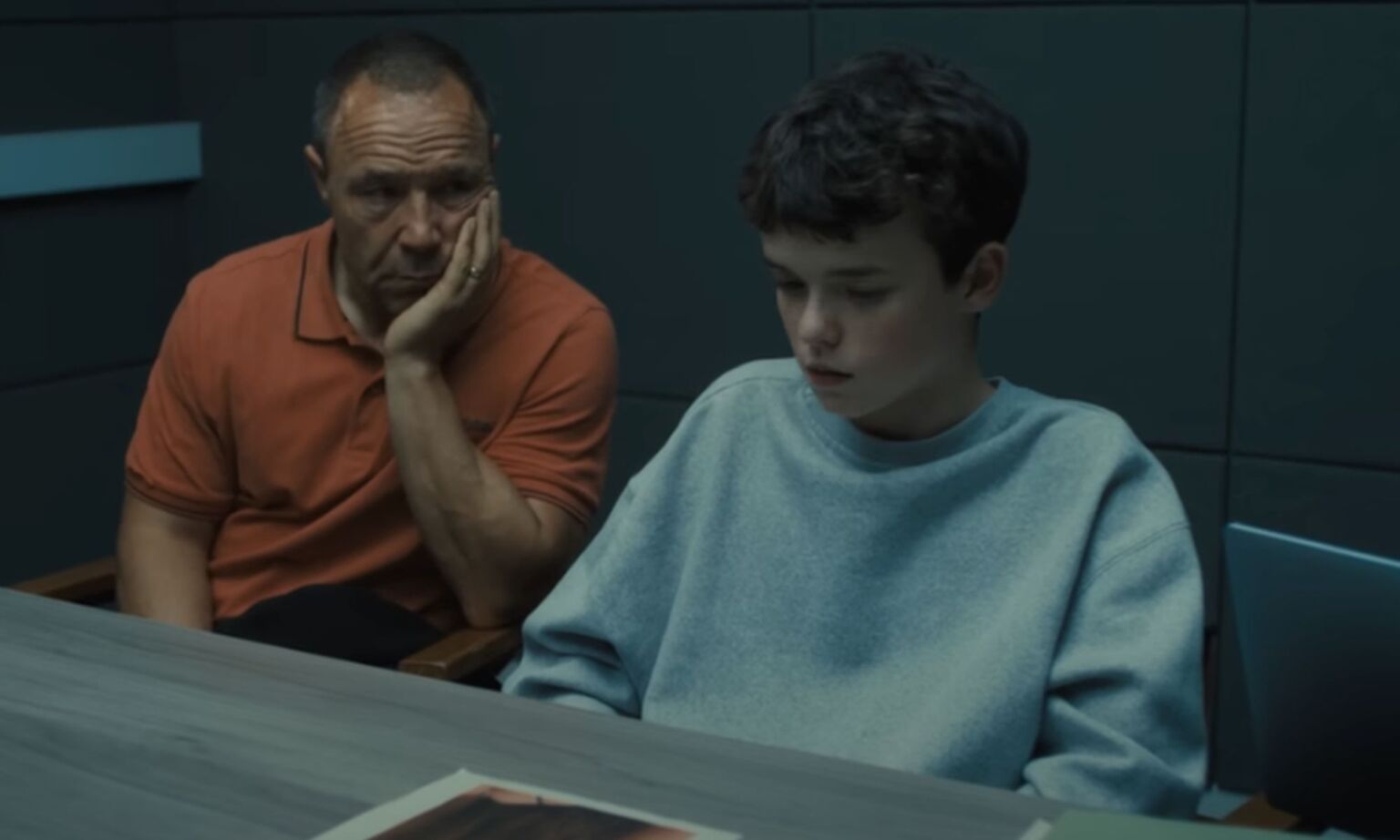
‘This is not just a drama’, said Labour’s then safeguarding minister, Jess Phillips, of the hit TV show Adolescence last year. ‘It’s a disturbing glimpse into the minds of thousands of young boys warped by the violence and abuse they are witnessing every day online.’
The statement was puzzling in many ways – not least because Adolescence quite literally was ‘just a drama’. However brilliant the young Owen Cooper was in his portrayal of a troubled boy who had stabbed a female classmate, however compelling the script, Adolescence was a work of fiction. Yet here was the minister responsible for tackling violence against women and girls (VAWG), treating this tale of a murderous, manosphere-obsessed schoolboy like a piece of academic research.
Phillips was not the only one. Several Labour MPs suggested the drama be screened in parliament and in schools, so important was its subject matter. Even the then prime minister, Keir Starmer, backed the initiative. When asked by MP Anneliese Midgley if he would step up to ‘counter toxic misogyny’, the prime minister stuttered, ‘It’s a very, very good documentary’. That slip – ‘documentary’ – says it all.
This is not to argue that art is incapable of reflecting reality and altering perceptions. Of course it can. But perhaps there are more prescient portrayals of misogynistic violence in modern Britain than a story about a teenage boy so enveloped in incel culture that he kills a female classmate. Especially seeing as no such incident has happened in the UK. Ever.
Some may recall a BBC drama named Three Girls, which also took on the issue of VAWG in modern Britain. Released in 2017, the series followed three teen girls who had been targeted by a predominantly Pakistani child sex-abuse ring in Rochdale between 2008 and 2012. The script was entirely based on a true story – one that mirrors the industrial-scale rape of thousands of working-class British girls over decades. Needless to say, there were no such calls to screen it in schools or parliament. While Adolescence was entirely based on what could happen, Three Girls was rooted in what has actually been happening.
Excessive emphasis on ‘mythical misogyny’ over material misogyny has become a staple of British political discourse in recent years. Mythical misogyny ought not to be mistaken for non-existent misogyny. Mythical misogyny still refers to something, namely, a collection of ill-defined, impossible-to-measure cultural phenomena that are constantly invoked as signs of a grave societal problem. These include toxic masculinity, red-pill content, menslib subreddits, rape culture on campuses, and so on. Material misogyny, on the other hand, denotes specific, real-world acts of rape, abuse and violence – acts that the British state is proving increasingly ineffective in confronting.
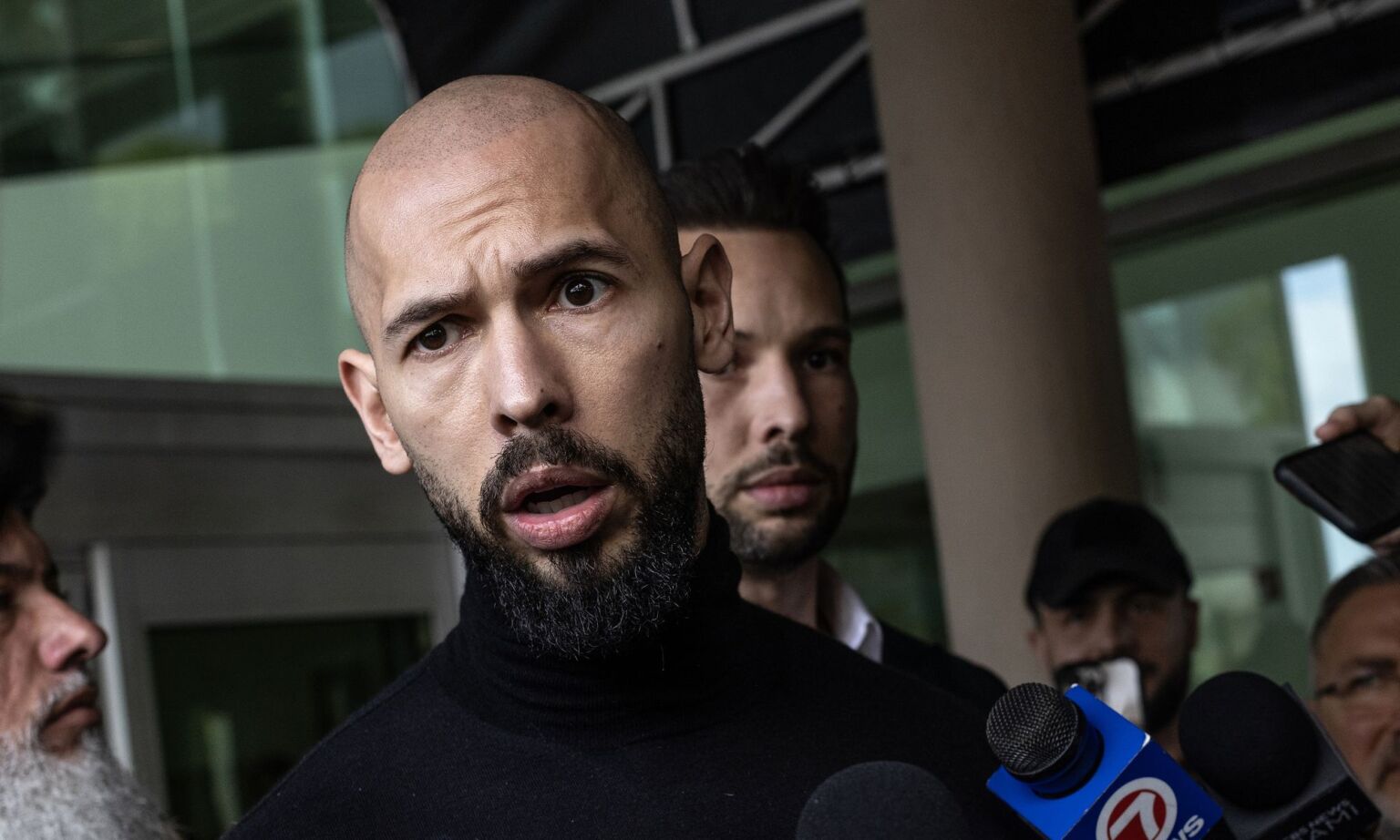
The so-called manosphere is the prime example of mythical misogyny. Not because the trends it describes are fabricated, but because it exists almost entirely in the ether. According to UN Women, the manosphere represents ‘a loose network of communities that claim to address men’s struggles – dating, fitness or fatherhood, for example – but often promote harmful advice and attitudes’. Its cast of villains includes online influencers such as Andrew Tate, HStikkytokky and Myron Gaines, all of whom have large and dedicated followings to whom they dish out poor advice about how to get girls and ‘level up’. The scariest thing about the manosphere, as a friend put to me recently, is that ‘you never know’ who might secretly be a member. ‘It could be anyone.’
Getty
Andrew Tate at Fort Lauderdale-Hollywood International Airport, Florida, 27 February 2025.
The effects of this online men’s club have caused much alarm among educators, many of whom report that misogyny in secondary schools has reached ‘epidemic levels’. In April of last year, a survey found that a third of teachers had witnessed misogynistic behaviour from students over the previous week. ‘It affected me really bad’, said one male pupil to the BBC, speaking about the effects that his red-pill content addiction had had on him. ‘It indoctrinates you… It took years for me to realise, you know what, this is wrong.’
To his credit, this student came across as honest and articulate about the struggles he had faced consuming these videos. Nonetheless, he was 14. Without diminishing his experience, the fact that it took ‘years’ for him to realise his views were childish might be because he was, in fact, a child. Bar carrying out physical harm against any of his female peers back in primary school – which it doesn’t appear that he or any of his fellow ex-Tate enthusiasts did carry out – this appears to be the pathologisation of the entirely natural process of maturing. Indeed, schoolboys calling their peers ‘sluts’, ‘chuzz’ and ‘ugly’ in school – as nasty as these things are – is nothing new.
I am not here to argue that parents should be fine with their sons watching roundtables of menfluencers call scantily clad female guests whores on livestream for two hours. Clearly, there are youngsters out there who are taking this stuff on board and parrotting it. What I take issue with is the idea that if we could only ‘re-educate’ these captured boys, the result would be a drastic reduction in real-life harms to women and girls.
Such magical thinking hinges on the poorly evidenced idea that Tate and his ilk are responsible for raising a generation of physically abusive young men, rather than simply feeding into the existing insecurities of a cohort of foul-mouthed secondary schoolers. These are boys who will, for the most part, become disillusioned with Tate all on their own when they eventually meet grown-up women who don’t want to date them.
And yet, fighting the effects of the online patriarchy is continually positioned front and centre in Labour’s fight to halve VAWG. In December of last year, the government unveiled plans for a £20million anti-misogyny programme to be rolled out in secondary schools across the country. ‘Toxic ideas are taking hold early and going unchallenged’, said Starmer. ‘This government is stepping in sooner… intervening when warning signs appear to stop harm before it starts.’
Trials of the programme involved pupils being taught about ‘consent, the dangers of sharing intimate images, how to identify positive role models, and to challenge unhealthy myths about women and relationships’. Teachers, meanwhile, will be offered training on how to ‘spot misogyny’ in the classroom. It was also determined that ‘high-risk’ boys could be sent on rather sinister-sounding ‘behavioural courses’ to help them ‘tackle their prejudice against women and girls’. What such courses will involve, and indeed what the threshold will be to qualify, remains to be seen.
Getty
‘By tackling the early roots of misogyny… the government hopes to prevent young men from becoming violent abusers’, surmises the BBC. Such rhetoric is quite astounding. Is it really a given that thousands of British boys will grow up to be ‘violent abusers’ if the government doesn’t manage to divert them on to a different path? Are we not even slightly concerned about what such a suggestion communicates to a teenage boy during what is already one of the most confusing, self-conscious periods of his life? Ironically, if you wanted to stoke actual societal grievance among young men, this is exactly how you would go about it.
One of the key issues with mythical misogyny, as opposed to material misogyny, is that its definitions are ever-expanding. ‘Toxic masculinity’ is a phrase that can encompass all kinds of behaviour, ranging from aggression, crass language toward women to the innocuous desire to adopt typically masculine traits. The Greater London Authority (GLA) provides a handy list of misogynistic behaviours, in which ‘catcalling’ and ‘stalking’ appear alongside baffling additions such as ‘confident and self-centred behaviour’ and being ‘competitive’. The examples of sexist phrases the GLA insists should be called out are ‘boys will be boys’, ‘my ex-girlfriend is crazy’ and ‘she’s such a drama queen’. The fact that the list ends there suggests that these really were the worst that the GLA could come up with.
The GLA, chaired by London mayor Sadiq Khan, oversees an ongoing, city-wide anti-harassment campaign which began in 2021. This multi-million-pound initiative is best known for a series of colourful posters situated throughout the London Underground, reminding people that ‘staring’, ‘exposing oneself’ and ‘unwanted touching’ are forms of ‘sexual harassment and will not be tolerated’. Seeing as sexual assaults on the London Underground have reached a five-year high since the start of the campaign, it is safe to assume that these handy hints have not had the intended effect.
Then again, it is not entirely clear what the intended effect is. Like the government’s anti-misogyny courses, TfL’s anti-harassment campaign’s obsession with ‘awareness’ is woefully misguided. Posters, infographics, consent classes, a group-watch of Adolescence in the science room after school – in what world are these effective ways of combatting abuse? These initiatives serve no other purpose than chastising men and boys who haven’t done anything wrong, while painting those who have as unfortunate cases that ‘slipped the net’.
The appeal of mythical misogyny to the political class is clear. It allows politicians to continuously blame the public for their supposedly misogynistic attitudes, rather than face up to the failings of the state, from the police to the judiciary. Politicians can ignore the actual victims of sexual violence, from the so-called grooming-gangs victims to those assaulted by asylum seekers, while standing in pseudo solidarity with an abstract mass of woman-kind.
Material misogyny does not allow for such slipperiness. Take the grooming-gangs scandal. Thousands of girls, some of whom were pre-pubsecent children, were systematically raped by organised gangs over decades, and the authorities, care workers and local councils were complicit in covering it up because they feared a race riot. There can be no question that heads must roll.
Or when women and children report being sexually assaulted in pubs, clubs, beaches, trains, graveyards, rooftops and parks by men who have no legal right to be in the country, it is clear that the time to ‘do better’ has long since passed.
An allegation of rape or assault is levelled at an asylum-seeker just about every week in modern Britain. According to a 2025 analysis by the Centre for Migration Control, foreign nationals are three times as likely to be arrested for sexual offences as their British counterparts. Also last year, the Telegraph identified 109 men from just 50 asylum hotels who had been charged with violent offences over a 12-month period. These included 44 sexual offences.
The willingness of the UK’s political class – even those who claim to be most concerned against VAWG – to turn a blind eye to this issue is staggering. During an LBC radio interview last year, host Tom Swarbrick asked Jess Phillips whether importing thousands of men from patriarchal cultures to Britain might be having an adverse effect on the women who live here, she visibly floundered. ‘Which culture doesn’t have patriarchy and misogyny in it?’, she said. Given that she said the British strain of patriarchy should be treated the same way as any other ‘extremist ideology’, her fear of criticising genuinely backwards, misogynistic cultures is telling. She concluded her interview with Swarbrick by telling him that the people who are ‘most likely to abuse’ are not men from any particular walk of life, but ‘men’, full-stop.
That isn’t going to fly anymore. Even if we ignore the statistics, the nature of these assaults remains an issue for the likes of Phillips. Most British women who suffer violence and sexual abuse do so at the hands of their partners. It is highly unusual in this country, due to prevailing cultural norms and mores, to have a stranger shove his hands up your skirt in a public place as he forces his mouth on to yours, or to be slapped on the backside by a passing cyclist as you go about your day. It is even more unusual to be picked up off the street, coerced into a dark corner and raped by a stranger. Conversely, in Afghanistan, Iran and Eritrea – consistently among the most top nationalities seeking asylum in the UK – such acts happen at a far higher rate. To wear a miniskirt in these countries at all, let alone to walk home drunk and expect to get there safely, would be unthinkable. For the UK government to admit this, of course, would be to admit that illegal migration and a multiculturalist ethos now pose a very real threat to women and girls.
The level of institutional cowardice it has taken to arrive at this point is shameful. While men are routinely dragged over hot coals for off-colour jokes or sexist tweets, the response to actual instances of VAWG – particularly from non-British nationals – is seldom as robust as it ought to be. Several cases detail asylum-seekers who have been convicted of violent and sexual offences – including possession of child pornography, assault and indecent exposure – who escape deportation on grounds of being at risk in their home countries. In one such instance, an Afghan national’s lawyer cited his client’s poor treatment of women as the very reason he must be allowed to stay in the UK – the concern was that if he performed the same ‘risky behaviours’ back home, he might be beaten up. Another case involved an Afghan asylum seeker called Abdul Ezedi. He was convicted of a sexual assault and twice denied asylum by the Home Office, before being granted approval to stay when an immigration tribunal heard he had converted to Christianity. In early 2024, Ezedi threw acid on a 31-year-old mother in Clapham, before killing himself amid a police manhunt.
One of the most egregious examples of the British justice system’s ineptitude in tackling VAWG occurred in spring this year. In a story that outraged the nation, three school-aged boys from the Irish traveller community were let off the hook with youth rehabilitation orders after gang-raping two girls in two seperate attacks. In the second instance, the terrified girl was held at knife-point. Both assaults were videotaped by the perpetrators.
One wonders what Labour’s anti-misogyny classes are actually for, if the boys in the age bracket they’re targeting earn little more than a slap on the wrist when they carry out a gruesome, pre-meditated sexual assault.
This horrific case and others like it show how unwilling our progressive establishment is to tackle material misogyny, especially when it involves certain victim-identity groups. So while politicos and pundits fuss over men calling women ‘crazy’ or ‘drama queen’, they look the other way when it comes to more serious problems. There are an estimated 12 honour killings that take place every year on UK soil, with victims almost exclusively women of immigrant backgrounds. Some British Muslim women are forbidden to leave the house without their husband’s permission. The Forced Marriage Unit handles around 300 cases a year, mostly within Britain’s Pakistani and Bangladeshi communities. According to the NHS, 6,980 individual women and girls were identified by healthcare professionals as undergoing female genital mutulation (FGM) between April 2024 to March 2025 – it is becoming apparent that some of these mutilations are being conducted within the UK. Why does all that talk about stopping violence against women and girls dry up when faced with such brutal misogyny? Where is Labour’s drive to ‘raise awareness’ among the minority communities in which abusive practices towards women are the norm, rather than the exception?
The disparity between mythical and material misogyny has never been more pronounced than it is today, especially when it comes to gender ideology. Women are bullied, spat on, and threatened because they refuse to accept that someone with a penis should be walking into the ladies’ room with them. Yet the political class rallies to the side of the man. In January, Labour MP Sarah Owen described new single-sex guidance, following the UK Supreme Court ruling on the biological meaning of sex, as ‘hostile’ to trans people. Owen, for reference, is the chair of the women and equalities committee.
Conversations about online influencers, masculinity, social media and gender norms are all well and good. But taking VAWG seriously requires asking more than how we get Year 12s off TikTok. It means asking why there are so many instances of authorities failing to investigate, prosecutors failing to prosecute, governments failing to enforce immigration laws, and repeat offenders remaining at liberty. These are not cultural mysteries – they are symptomatic of a state that is willingly abandoning its women. There is only so long this government can continue to pretend otherwise.
Get unlimited access to spiked
You’ve hit your monthly free article limit.
Support spiked and get unlimited access.
or
Already a supporter? Log in now:
Support spiked and get unlimited access
spiked is funded by readers like you. Only 0.1% of regular readers currently support us. If just 1% did, we could grow our team and step up the fight for free speech and democracy.
Become a spiked supporter and enjoy unlimited, ad-free access, bonus content and exclusive events – while helping to keep independent journalism alive.
Monthly support makes the biggest difference. Thank you.
Comments
Want to join the conversation?
Only spiked supporters and patrons, who donate regularly to us, can comment on our articles.